




3 Main Ways for Foreigners to Use Alipay in China (Latest 2026 Guide)
Method 1: Linking an Overseas Bank Card (Most common; top choice for tourists)
Required Items
Overseas mobile number, passport, and an international credit/debit card (Visa, Mastercard, AE, JCB, or Discover)
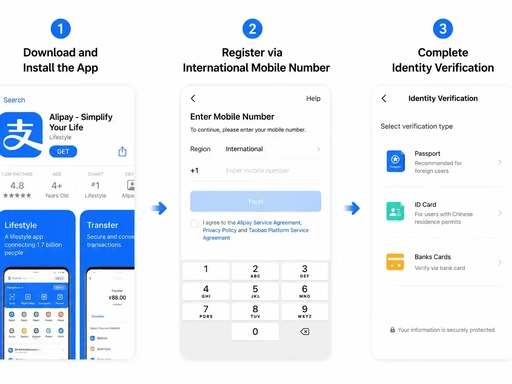
Registration & Linking Process
Steps
Search for "Alipay" (International Version—supports English and other languages) in the app store and download it; register using your home country's mobile number and select the corresponding country code to receive the verification code.
Go to "Me" → "Settings" → "Identity Verification"; select "Passport" as the document type, upload the passport information page and the page with the entry stamp, and complete facial recognition.
Go to "Me" → "Wallet" → "Bank Cards" → "Add Bank Card"; select "International Card," enter the card number, expiration date, CVV, and English billing address; complete the 3D verification required by the issuing bank to link the card.
Payment: Tap "Pay" on the home screen to show your payment code for the merchant to scan, or scan the merchant's collection code yourself.
Fees & Limits
Single transaction ≤ 200 RMB: No service fee; Single transaction > 200 RMB: 3% service fee charged per transaction.
Maximum 5,000 RMB per transaction; annual cumulative limit of 50,000 RMB.
Supports offline purchases, ride-hailing, ticket booking, and food delivery only; does not support transfers, sending "Red Packets," or wealth management products.
Method 2: TourPass Tourist Prepaid Card (Alternative if you cannot link an overseas card)
Search for "TourPass" (tourist prepaid card) on the Alipay home screen.
After verifying your identity with your passport, use an overseas card to pre-load funds (100–2,000 RMB).
Functions like an Alipay RMB balance; payments are deducted directly from the balance with no 3% service fee.
You can apply to have the remaining balance refunded to your overseas bank card before leaving China.
Method 3: Opening a Local Chinese Bank Card (For foreigners working or residing long-term in China)
Bring your passport and valid residence permit (or Foreigner's Permanent Residence ID Card) to a local bank branch to open an account and get a debit card.
Link the bank card to Alipay and complete identity verification using your passport.
Advantages: No cross-border service fees, high payment limits, and full functionality (supports transfers, Red Packets, online shopping, wealth management, and utility bill payments).
Method 4: Alipay+ Scan-to-pay directly with overseas wallets (no need to register for Alipay)
Overseas tourists do not need to download the Alipay app; they can simply use the e-wallets commonly used in their home countries (such as South Korea’s KakaoPay, Singapore’s PayNow, or Thailand’s TrueMoney). By scanning the QR code at merchants displaying the "Alipay+" logo, users can make payments in RMB, with the transaction automatically settled in their local currency at real-time exchange rates.
Commonly Asked Questions
Card linking failure: The billing address must be entered in English; ensure the bank card has "card-not-present" (CNP) overseas payment and 3D Secure verification enabled; using a card with only the Visa or Mastercard logo (single-branded) is recommended.
Not accepted at some small shops: Wet markets and street vendors often only accept the standard Mainland China version of Alipay; it is advisable to carry a small amount of RMB cash as a backup.
Can I take the subway or bus? Yes; after completing real-name verification and linking a card, you can obtain local digital transit passes within the Alipay app to use public transportation.